
Travel is one of the most exciting themes to explore in a French classroom. It gives students the chance to practice real-world language skills while sparking curiosity about francophone countries around the world. To help you start planning your French Travel Unit, here are 7 fun and engaging activities that will get your students talking, exploring, and loving French at the same time!
1. Map Talk
Map Talk is an instructional strategy that helps students practice their French language skills while interacting with a map. It encompasses cross-curricular skills such as geography and social studies, and allows students to work in small groups to connect to real-world geography and culture.
You will first want to pick a map that can be used to spark a class discussion. This can be a metro map, a francophone city tourist map, a francophone country map, or a map related to your unit of study. You can then ask your students questions about certain locations, distances, directions, and cultural or geographic features, all while referencing the map. I would encourage students to work together in small groups so that they can use their collective vocabulary, spatial awareness skills, and cultural knowledge to describe the French-speaking region.
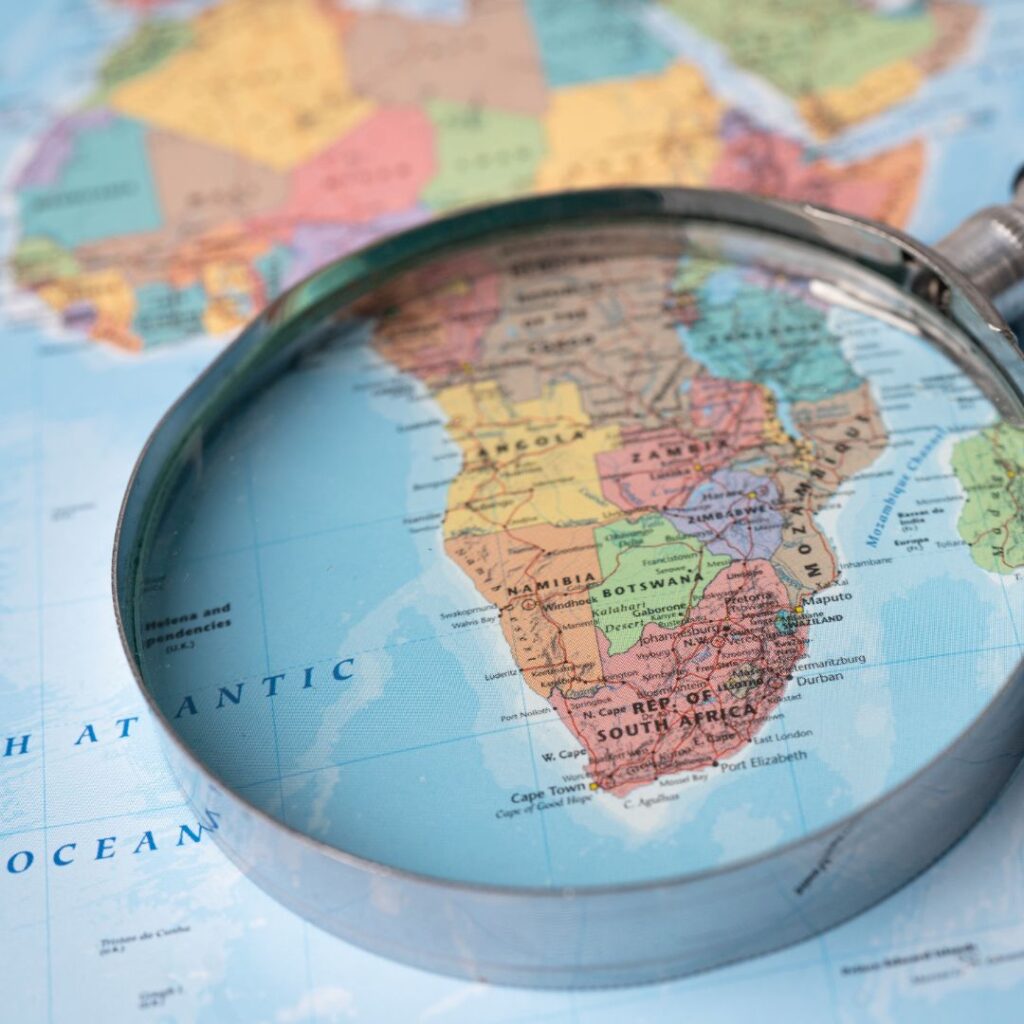
Map talk is a great fun activity to have students practice their oral French in an interactive way because they can visually see what they are talking about. If you are looking for a simple sample map talk, here is one that I’ve used in my grade 9 class during our French Travel Unit..
2. Destination Research Project
A small research project is another fun activity that you can incorporate into your French Travel unit that will allow students to grow in intercultural awareness and their general knowledge of French-speaking regions around the world.
Assign each student or small group a francophone city or country (Belgium, Burkina Faso, Laos, Québec, etc.). Students can research landmarks, food, cultural celebrations, traditions, and music. Then they can present their findings through a poster, slideshow, short video, or postcard template. This activity connects culture directly to language learning by encouraging students to use French vocabulary in a meaningful and real-world context.

Are your students more advanced? Take it a step further by asking them to explore an important current event in a francophone country. They can research news articles (in French, if possible), summarize the event and prepare to share the significance with their classmates. This could take the form of a round table discussion where each student becomes the “expert” for their assigned country and leads a short conversation.
3. Role-Play Dialogues
Role-play dialogues are another fun activity that you can incorporate in a French Travel Unit to set students up for success around real-life, authentic conversations they may experience in the future.
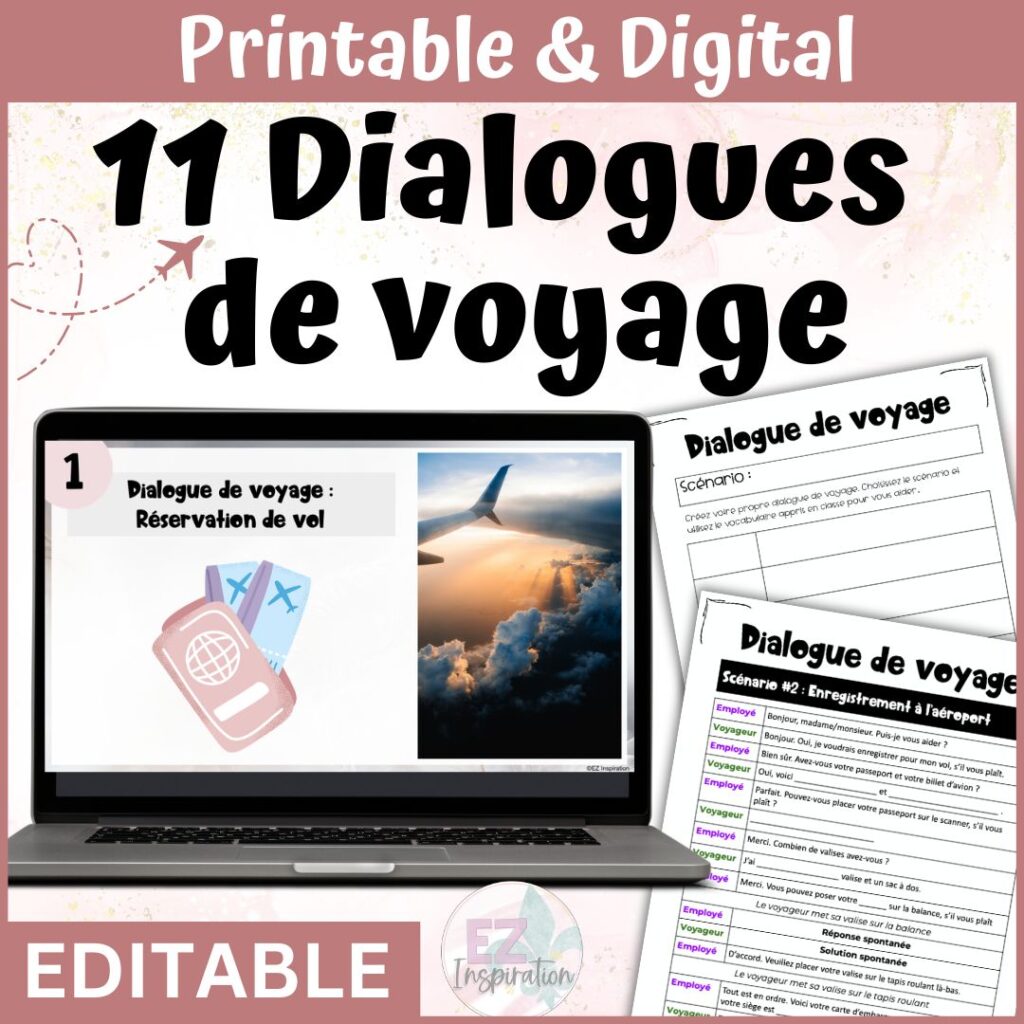
You can create a mock airport, train station, restaurant or hotel counter right in your classroom. Assign students different roles such as travelers, flight attendants, hotel clerks or taxi drivers. For example, a student may ask, “À quelle heure est l’embarquement ?” while another student responds as an airport employee offering assistance.
When creating these authentic role-play conversations, you are allowing students to practice their vocabulary and also understand the cultural nuances of politeness and interactions in French. If you are looking for no-prep dialogues that encourage students to use their imagination, check out my bestseller resource HERE.
4. L’argot
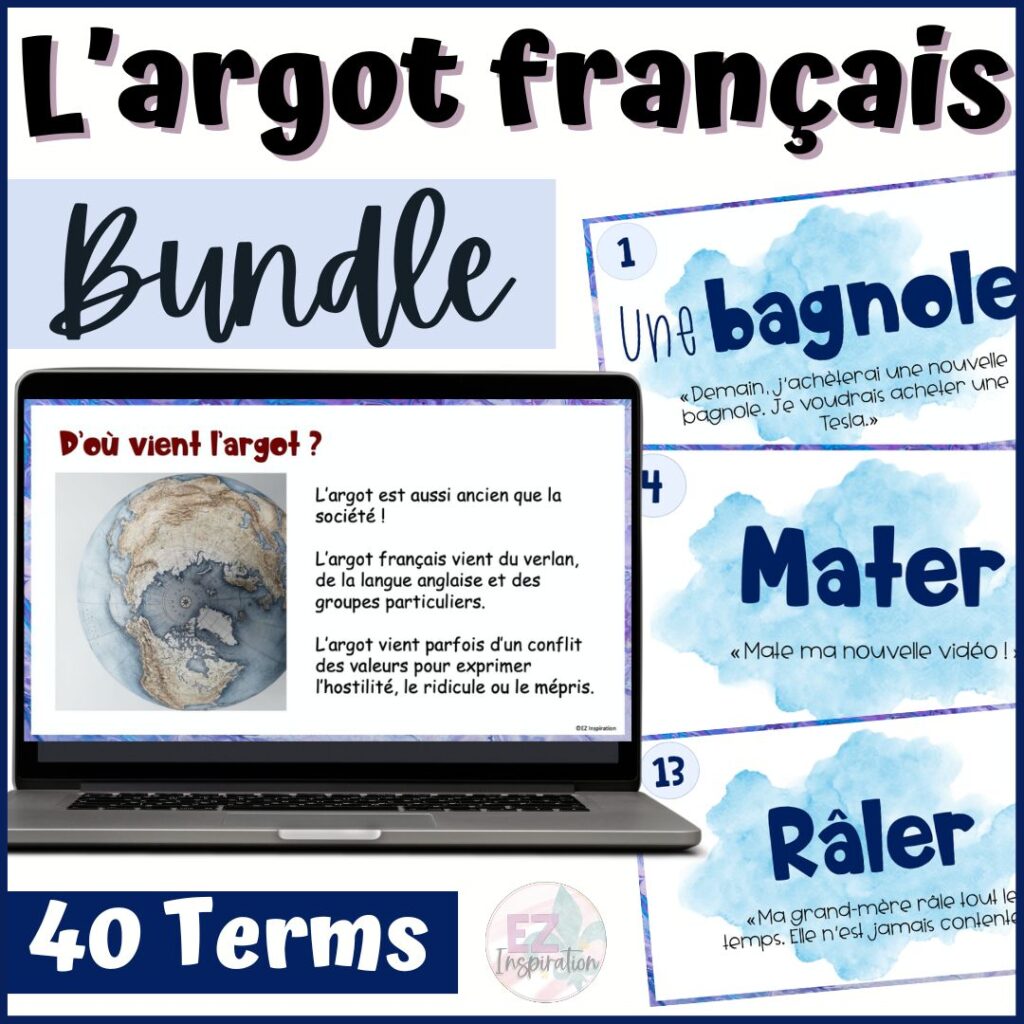
One of the most exciting parts of travel is discovering how language changes from place to place. French slang, or l’argot, varies greatly not just between France and Québec, but also across francophone countries in Africa, the Caribbean, and beyond. Introducing your students to slang helps them to experience French beyond the textbook and make connections with the slang that they use in their native language.
I would encourage you to research slang terms from different francophone regions that you can share with your students. Students can then research these slang terms and where they originate from. For example, in Québec, un char means “a car”, while in France it means “a tank.” In Senegal, you might hear ça roule ? (How’s it going?), while in Québec, students might recognize quoi de neuf ? Students will quickly see that slang reflects culture, identity and local history.
If you are looking for a fun French slang resource, here is my favorite resource that I use to create a gallery walk with my students. We also talk about the slang that we use in English and how it compares to French.
5. Postcards
Incorporating postcards into a French travel unit is another fun way to engage students while practicing writing and creativity. You can start by showing examples of postcards from various French-speaking regions, highlighting famous landmarks, local art, or typical scenes. Then, have students create their own postcards as if they are traveling in Morocco, Vietnam or other Francophone countries.
Students can write short messages in French on the back of the cards, using key phrases like “J’ai visité…” or “Je suis à …” You can even turn it into a collaborative activity by having students exchange their postcards and respond to each other, mimicking the experience of sending and receiving mail while traveling.
To make it more engaging, consider adding a map to your classroom where students “send” their postcards to different destinations, or create a gallery of their postcards for display. This activity will reinforce travel vocabulary, sentence structure and spark curiosity about different francophone countries in a visually creative way in your French Travel Unit.
6. Travel Vlogs or Video Diaries
Travel Vlogs have become increasingly popular over the past decade, and they are another opportunity that you can use to immerse your students in a French Travel unit.
Many YouTube channels showcase francophone countries, cities, and daily life experiences, and this allows students to gain an authentic look into francophone culture and language. Travel vlogs will also highlight regional accents and expose students to real-life vocabulary used in context. Here are a couple of my recommendations: Français avec Nelly and Piece of French if you want vlogs in slower French.
You could even encourage your students to create their own travel videos of a francophone destination or analyze an existing travel vlog as a class for an extension activity! Students can summarize key points and discuss cultural insights that they gained along the way.
7. French Travel Trivia Games
Integrating trivia games into your French travel unit is an excellent way to reinforce vocabulary, geography and cultural knowledge in an engaging and competitive format.
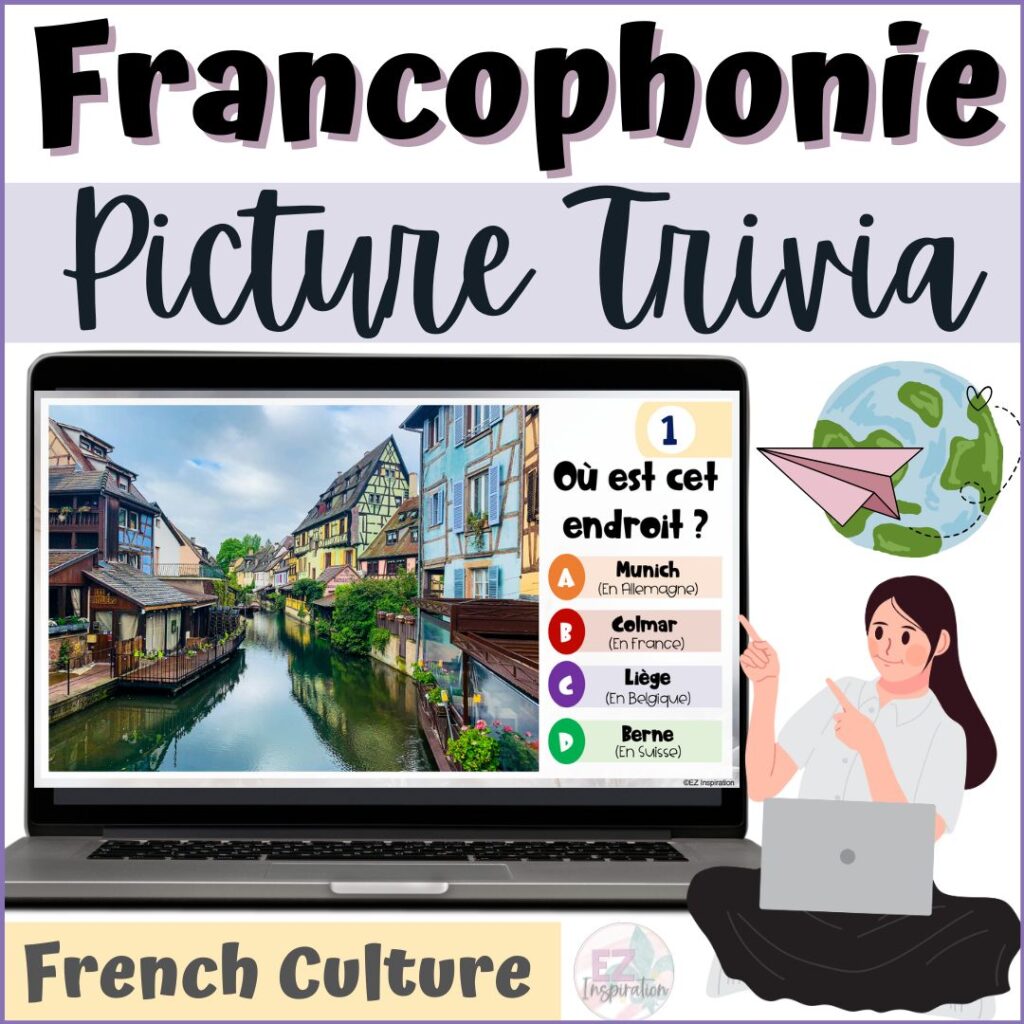
You can create a trivia game on Kahoot, do a Jeopardy-style game show or an interactive presentation where students will answer on a separate sheet and then take up their answers at the end.
If you want to make it super simple, I would encourage you to gather pictures from different francophone destinations around the world and then have students try to identify them in a trivia-style format. Here is my version that we always play at the start of our French Travel Unit. It is a hit in the class, and students get very competitive!
Conclusion
Planning a French Travel unit doesn’t need to be hard, and it is the perfect opportunity to make language learning authentic, engaging, and memorable. If you are looking for a thematic French Travel unit that you can use with your Intermediate and Advanced French students that includes other ideas, be sure to check out my resource, which has so many engaging lessons and immersive activities that will allow students to enhance their French proficiency and build their confidence in meaningful ways.
PS: If you are looking for other ways to incorporate French culture in your classroom, be sure to check out my blog post on: Why French Culture is the Key to Language Learning Success.